CRIAD
The platform

The verified data layer

Criad turns the documents and models of a data centre build into one verified data layer, puts AI on top of it, and produces outputs you can check. Retrieve. Verify. Act.

Files come in as they are. Every answer cites the sheet, the clause or the measurement. People decide.

Why the ground is missing

An agent is only as good as the ground it stands on

Today the ground is a person. One human holds the connections between drawings, specs, the model and progress in their head. AI cannot read those.

So AI on top of it guesses: the wrong revision, the superseded spec, a limit it never measured.

$31.3B a year

estimated US rework driven by poor data and miscommunication

FMI / PlanGrid, 2018

53%

of construction professionals spend 10+ hours a week chasing information

Quickbase, 2023

What exists today

Construction is information-rich, but context-poor

Document platforms

CDEs · document control

Store and distribute every file, every revision, with a clean audit of who issued what and when.

The documents stay disconnected from the model and from each other. Storage, not answers.

Coordination tools

BIM · clash detection

See the federated geometry and find where trades collide, before it happens on site.

Geometry only. No contract documents, no authority, no procurement or progress attached.

AI assistants & agents

Copilots · chat · agent builders

Plain-language answers and drafted paperwork from the documents in the platform.

Documents linked to documents. Nothing is measured, and no rule decides which source governs when they disagree.

Criad builds the missing ground: documents, geometry and authority connected in one structure, the data layer the others do not have. That is why answers here can be retrieved, verified and acted on, not guessed.

Key capability 01

A data model of the whole project

Drawings, specs, the 3D model, submittals, programme and procurement, connected element by element and ranked by authority.

Files come in as they are. Criad reads them into one structure where every element knows the sheet it is drawn on, the clause that limits it, the product it was ordered as and the package it is built under. When sources disagree, the governing one wins, and the others stay visible.

Connected, not just stored

An element links to its drawing, spec clause, order and status. A document lists everything it governs.

Ranked by authority

Contract drawings outrank specs, specs outrank model values, model values outrank catalogue defaults. One governing answer, its source named.

Measured on real geometry

Sizes and clearances are measured on the model in real coordinates, never guessed from text.

Revision aware and open

A new revision updates every element on it. The data stays open, portable and yours.

One connected structure
  • Reference campus
  • Sources
  • Drawings152 sheets
  • Specifications
  • Submittals
  • Programme
  • Registers315 files
  • Model
  • Hall 2
  • Power
  • Electrical cabinetH2-001 · 96 on site
  • Hall 1 · 3 · 4 · 5 · 6
  • Intelligencechecks · clarifications
Layered by authority
Component Electrical cabinet H2-001Query Allowed depth
  1. Contract drawingsSTRONGESTsymbol only
  2. SpecificationsCLAUSE-LEVEL≤ 0.92 m
  3. Issue & design intentSTAGE OPINIONSnot raised
  4. Install & progressAS-BUILT FACTSnot installed
  5. Model-derived valuesCOMPUTED0.90 m
  6. Packages & document registerBUNDLESsubmittal open
  7. Catalogs & defaultsWEAKEST1.00 m

Green dot: this layer holds a value for the query. The ring marks the layer that answers. Red: a value that disagrees with the model. Here the ordered cabinet is 1.00 m deep against the 0.90 m modelled, and over the 0.92 m limit.

Capabilities in this pillar

Connect every source

Drawings, specs, submittals, programme and the model come in as they are and are connected into one structure.

Files come in as they are. Every element is linked to the drawing it is drawn on, the spec clause that limits it, the product it is ordered as, the package it is built under and the record it is operated from. An answer is a lookup along those connections, not a search through documents.

42U RACK · DATA HALL

  • 0.60 × 1.20 × 2.00 m
  • 240 per hall
  • 1 of 1,440 on campus
  • measured in

    3D MODEL

    Real geometry, shared origin: sizes and

    clearances are measured, never guessed

  • drawn on

    GOVERNING DRAWING

    telecom layout · rev 1 · issued 17 Jul 2026

    a new revision updates every element on it

  • limited by

    SPEC CLAUSE

    envelope max 0.60 × 1.20 × 2.00 m · telecom spec

    ✓ checked automatically, every revision

  • ordered as

    PRODUCT & ORDER

    one approved product · 1,440 units

    approve once, the whole order updates

  • built under

    PROGRESS

    status per rack · phase-aware, both phases

    reports roll up live, nothing retyped

  • operated as

    OPERATIONS

    O&M row · warranty · fibre & power paths

    the handover is these links, kept alive

real values from a structured reference campus
One source governs

Sources are ranked by authority, so one source governs when they disagree.

Contract drawings outrank specifications. Specifications outrank catalogue defaults. Every value knows which layer, and which document, said it. "Why is this 0.92 m?" has a definite, inspectable answer.

Measured on real geometry

Sizes and clearances are measured on the model, never guessed.

The model keeps its real geometry and a shared origin. A limit in a spec is checked against the measured element. On the reference campus the spec allows a cabinet depth of 0.92 m. A requested 1.0 m cabinet measures 0.08 m over.

allowed depth 0.92 mrequested cabinetspec limitrequested 1.0 m · 0.08 m over ✗

Track every change

When a new revision lands, every element it touches is known.

Every element drawn on a sheet is known, so the change list writes itself: what moved, what it affects, who needs to know. One change is never one change. The knock-ons reach the product order, the governing drawing and the install plan.

Telecom layoutrev 1
ABC0.60 m

illustrative example

What rev 2 touches

  • Rack row C moved 0.60 m
  • 12 racks affected
  • Install plan: 1 package to re-sequence
  • Who needs to know: 3 trades

Flagged before anyone builds to the old sheet.

Open and yours

Web-based, reachable by API, and built on an open standard.

Built on OpenUSD, the open standard: your project data stays open, portable and yours. The record stays live and queryable into operations. Your own tools and agents can read the same verified structure through the API.

SITE 1 · STRUCTURED

HALL 1✓
HALL 2✓
HALL 3✓
HALL 4✓
  1. 1Ingest as issued: model, 152 sheets, specs
  2. 2Link: element → drawing · spec · order · status
  3. 3Verify: by authority, measured on geometry

One campus, fully structured

SITE 2

same checks · re-run ✓

SITE 3

same checks · re-run ✓

SITE N

same checks · re-run ✓

Knowledge compounds across the fleet

OPERATIONS · FROM DAY ONE

> which rack is this?

✓ schedule row, spec, approvals attached

> what serves it?

✓ rack ← distribution frame ← fibre entry

> still under warranty?

✓ O&M row and warranty on record

The record stays live and queryable for decades

example queries from a structured reference campus

Key capability 02

AI that stands on verified ground

Ask in plain language. Every answer comes with the sheet, the clause or the measurement it rests on.

An agent is only as good as the ground it stands on. Because the data model holds the connections, the AI does not guess from a pile of documents: it looks the answer up along links that already exist, measures where it needs to, and shows its evidence. It drafts the paperwork. People decide.

Answers with evidence

On the reference campus, ask how deep a cabinet may be and get 0.92 m, from the governing spec, with the clause attached.

Knock-ons, not just answers

One requested change lights up every element, order and drawing it touches.

Drafts, ready to review

Change assessments and RFIs arrive with the clauses, sheets and measurements already attached.

Works with the AI you already have

The same verified ground is available to other tools and agents through the API.

CriadReference campus Live workspace
00 Model › Campus modelModel stage
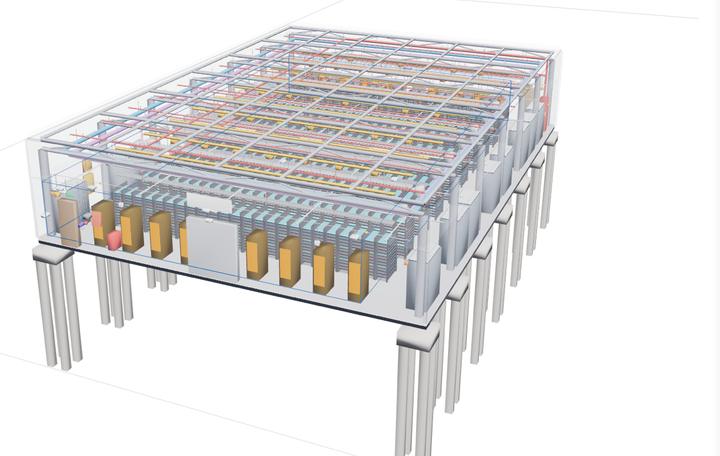
Viewport · whole campus · cutaway · read from OpenUSD

Retrieve

Any fact about the project, pulled from one connected structure, in seconds. Not searched for across five systems.

"How deep may the Hall 2 cabinets be?" 0.92 m, from the governing spec.

Verify

Checked against the governing drawing or spec, measured on real geometry, evidence attached to every answer.

Requested 1.0 m measured against it: 0.08 m over the limit.

Act

People decide, with the proof in front of them. Every decision reviewable later, with its evidence still attached.

The change assessment, both sources cited, in front of the person who decides.
You do not get there by adding chat to the document pile. You get there by fixing the ground.

Capabilities in this pillar

Ask in plain language

Ask a question about the project and get the answer with its source cited.

"How deep may the Hall 2 cabinets be?" 0.92 m, from the governing spec. Any fact about the project is pulled from one connected structure, in seconds, not searched for across five systems. Every answer cites the sheet, the clause or the measurement.

Key capability 03

Structured, validated outputs

Checks, take-offs, progress and reports, generated from the same source and validated before anyone acts on them.

An answer in a chat window is not a deliverable. Criad turns questions into outputs teams already use: a dashboard, a spreadsheet, a register, a report, a 3D view. Each one is checked by machine against the governing documents, carries its citations, and re-runs when a revision lands.

Machine checks

Envelope, clearance, count against code, submittal against clause. Written once, re-run on every revision.

One source, many renderings

The same check as exec tiles, a spreadsheet, a sentence or a 3D view. They cannot disagree.

Audit trail built in

Every value knows which document said it. Every decision keeps its evidence for later review.

AI proposes, machines check, people decide

Nothing reaches site on an unverified answer.

Dashboard
0 / 0
HALL 2 CABINETS INSTALLED
A4401
WORK PACKAGE
Day 0
REPORT DATE

The same check as exec tiles, every number cited.

Excel
ELEMENT
PACKAGE
STATUS
Cabinet H2-001
A4401
Not started
Cabinet H2-002
A4401
Not started
Cabinet H2-003
A4401
Not started
16 of 16 pending
package A4401

The same rows, straight into the spreadsheet teams already use.

Plain text

"Which Hall 2 cabinets are installed?"

source: Progress layer · package A4401

The same answer as a sentence, citation included.

3D view · the real model
Hall 2 power cabinets isolated on the model
Hall 2 · Power · 16 cabinets

The same 16 cabinets, isolated on the real model in the product.

Four renderings, one source. Because they all draw from the same connected data, they can never disagree with each other.
  • Electrical cabinets96model: yeschecked: yesRequested 1.0 m depth is 0.08 m over the 0.92 m spec limit.
  • Data racks1,440model: yeschecked: yesno open item
  • Hall 2 cabinets16model: yeschecked: yesAll 16 not started at the day 90 report, package A4401.
  • Contract sheets152model: yeschecked: yesno open item
  • Published files315model: yeschecked: yesno open item
2open items, each linked to its elements and sheet
152sheets read as data
Checks re-run on every revision

Where the model, the drawings and the spec disagree, as of the current revision. Values from a reference campus.

Capabilities in this pillar

Checks that re-run

A requirement becomes a check that runs on every element and every revision.

Every requirement is checked against the model, automatically. A check written once runs again when a revision lands, and again on the next site. Each result carries the clause and the measurement. A person reviews the result and decides what to do.

Publish with citations

Run a check once and publish it as a dashboard, a spreadsheet, a sentence or a 3D view.

Four renderings, one source. Because they all draw from the same connected data, they can never disagree with each other. Every number keeps its citation, so a report can be audited later.

Design to operations

The same structure answers every stage

Design

"Does this layout meet the spec?"

Every requirement is checked against the model, automatically.

Envelope check · 0.90 m vs 0.92 m allowed · pass
Procure

"How many are we buying, and to what spec?"

Counts read straight from the model; every item linked to its spec and package.

Take-off to spec · 96 cabinets · the spec · one package
Build

"Where are we against the programme?"

Install status per element rolls up from the model, not retyped returns.

Progress rollup · Hall 2 · 16 cabinets not started
Operate

"This unit tripped. What feeds it?"

The power chain traces back through the model, O&M record attached.

Power trace · cabinet ← switchboard ← transformer ← grid
AI proposes · machines check · people decide. Each stage adds to the same structure, so the intelligence compounds.

Judge it on a real job.

Not claims on a slide, and not a canned demo. Your live project, your real questions, and evidence you can check yourself.

Your project, as it is. Drawings, specs, model and programme come in without retyping.

Your questions, with evidence. Every answer cites the sheet, the clause or the measurement.

Your people decide. Every decision keeps its evidence for later review.

Stop waiting. Start building.

Book a call with the founders. Thirty minutes, your questions, and what Criad looks like on a data centre build.

Book a call